Back to Catalog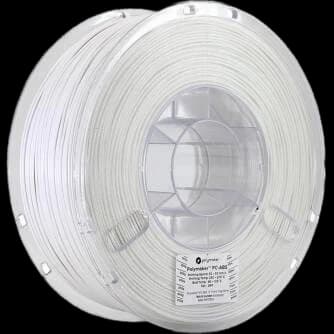 ABS
ABS
ABSPolymaker
ABSPolymaker
Polymaker PC-ABS is a blend of PC (polycarbonate) and ABS (acrylonitrile butadiene styrene copolymer). The material offers excellent strength and rigidity, as well as good temperature resistance. At the same time, the filament is particularly easy to post-process. This printing material can be used on virtually any printing surface. We recommend Magigoo PC adhesive and, whenever possible, a flexible build plate to make it easier to remove the part. Annealing: PC-ABS can be annealed in an oven. During this process, the material tends to transition from an amorphous to a semi-crystalline state. In practical terms, this means that the material properties improve. For annealing, Polymaker recommends an oven temperature of 100°C for two hours. Painting: The filament paints well. To ensure good results, the part’s surface should be clean and free of dust and grease. Polyurethane-based paints and primers work particularly well. We recommend paying close attention to which paints and solvents are used in combination with PC-ABS. Certain chemicals can attack the material, leading to discoloration and cracks. If this information is not available in the data sheet, please contact the manufacturer of the paint or solvent and ask whether it is compatible with PC-ABS. Welding: Parts made from Polymaker PC-ABS can be joined using ultrasonic, vibration, friction, hot-plate, or laser welding. For the best possible results with ultrasonic welding, it is important to ensure a properly formed weld seam. Bonding: Polymaker’s PC-ABS filament bonds well. Before bonding, all traces of grease or dust should be removed from the part’s surface. Various cleaning agents and solutions that do not damage the material can be used to clean the object. Sanding (roughening) improves the adhesion of the bonded areas. Various two-component adhesives, epoxy, silicone resins, and polyurethanes have shown good results in tests. Metallization: The filament is well-suited for plastic metallization. During this process, the printed object is coated with a layer of aluminum, tin, or copper using a vacuum or "electroplating" technology. To protect the very thin metal layer, we recommend painting it with a coat of paint or primer. Polymaker PC-ABS is an industrial plastic primarily intended for professional users. However, the filament can also offer advantages for home and private users. Thanks to the material’s impact resistance, PC-ABS is suitable, for example, for the automotive industry (center consoles, glove compartments, roof consoles, pillar trim) or for electrical components such as TV frames, keyboards, and general covers. Note: In February 2022, Polymaker began transitioning all filaments to cardboard spools. This transition will take place gradually over an extended period. Both the manufacturer and we, as a retailer, will of course sell off the old stock first before the new spools become available. The filament itself remains unchanged by this transition; it is merely a change in packaging, as well as a new EAN and SKU number.
Material TypeThe base polymer type determines printability, strength, flexibility, and heat resistance
ABS
Print TemperatureRecommended nozzle temperature range. Stay within range for best layer adhesion and surface quality
250°C - 270°C
Bed TemperatureHeated bed temperature to prevent warping. Some materials like PLA can print without a heated bed
90°C - 105°C
Diameter1.75mm is standard, 2.85mm for some printers
1.75 mm
Spool WeightNet weight of filament on the spool. Standard spools are 1kg (1000g)
1g
* Affiliate link: We may earn a commission if you purchase through this link – at no extra cost to you. Learn more
* Prices include VAT, plus shipping. We may earn a commission if you purchase through these links – at no extra cost to you. Last updated recently.
No price data available
No reviews yet
 ABS
ABSExtrudr
 ABS
ABSForward Am
 ABS
ABSPolymaker
 ABS
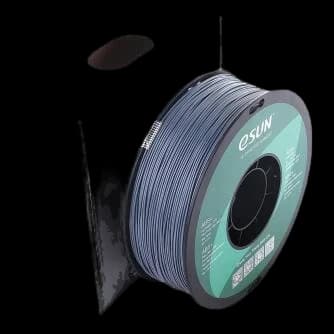
ABSeSUN