PLAFlashforge
Compare with other PLA filaments
Find the best filament for your project
affiliate.disclosure affiliate.learnMore
* Prix TTC, hors frais de livraison. Dernière mise à jour récente. Liens affiliés.
Les prix sont susceptibles de changer. Les données historiques sont fournies à titre indicatif uniquement.
Aucun avis pour le moment
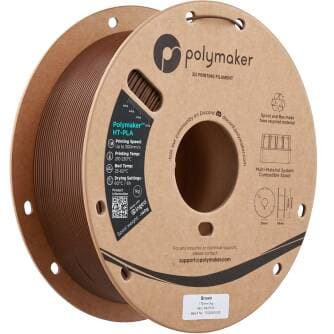
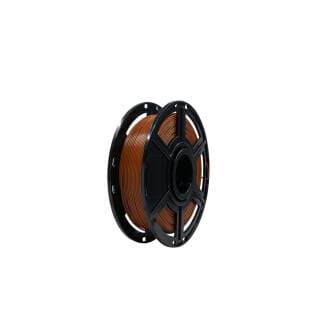
Flashforge PLA Brown is a high-quality 3D printing filament made from polylactic acid (PLA), ideal for use in desktop 3D printers. This material stands out for its ease of use and eco-friendly properties. PLA is a biodegradable thermoplastic derived from renewable resources like cornstarch or sugarcane. The brown color gives printed objects a natural, warm tone, suitable for both functional and decorative applications. For optimal print results, a nozzle temperature between 190 and 220 °C is recommended, while a heated print bed should be set to 50–60 °C. A bed distance of 0.1–0.2 mm ensures good adhesion. With a diameter of 1.75 mm, this filament is compatible with most common 3D printers. PLA is known for its high strength and stiffness, making it suitable for models, prototypes, and functional parts that do not require extreme heat resistance. However, PLA is less flexible than other materials like ABS and may deform at high temperatures. The spool’s coated surface protects the filament from moisture and dust, improving print quality. Weighing 500 g, this spool offers a good balance between quantity and ease of handling.
Type de matériauThe base polymer type determines printability, strength, flexibility, and heat resistance
PLA
Température d'impressionRecommended nozzle temperature range. Stay within range for best layer adhesion and surface quality
190°C - 220°C
Température du plateauHeated bed temperature to prevent warping. Some materials like PLA can print without a heated bed
50°C - 60°C
Diamètre1.75mm is standard, 2.85mm for some printers
1.75 mm
Poids de la bobineNet weight of filament on the spool. Standard spools are 1kg (1000g)
500g
DensitéMaterial density affects part weight. Higher density = heavier prints for the same volume
1.24 g/cm³