PLAPrusa
Compare with other PLA filaments
Find the best filament for your project
* Affiliate link: We may earn a commission if you purchase through this link – at no extra cost to you. Learn more
* Prices include VAT, plus shipping. We may earn a commission if you purchase through these links – at no extra cost to you. Last updated recently.
No price data available
No reviews yet
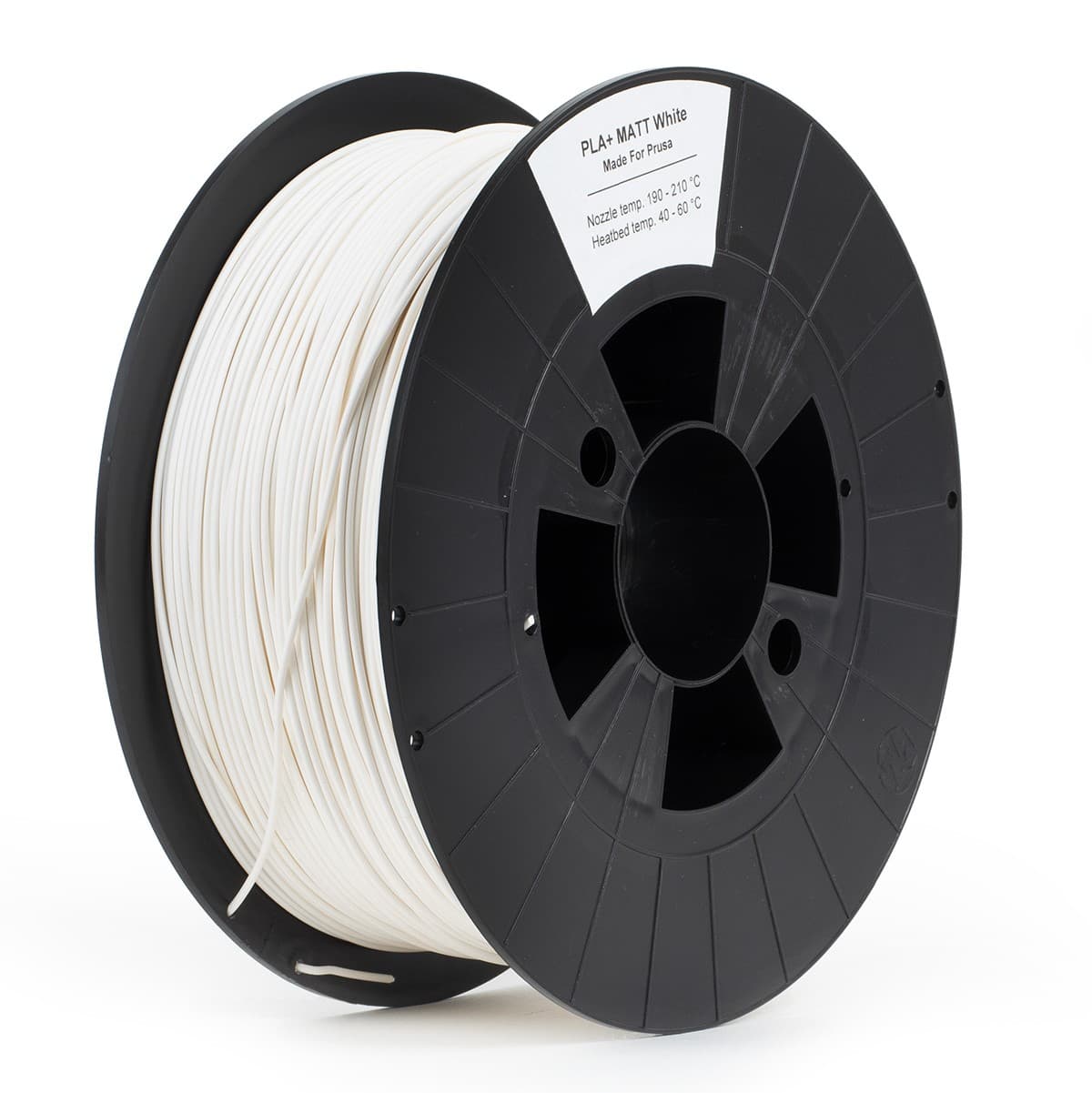
Prusa PLA+ Matt White is a premium 3D printing filament based on PLA, designed for users who prioritize a matte finish and enhanced mechanical properties. Unlike standard PLA, this material features reduced light reflection, resulting in a sophisticated and uniform appearance for printed models. The PLA+ formulation makes the filament more resistant to impact and shock than conventional PLA, thereby increasing the durability of prints. Recommended printing temperatures range from 210 °C to 225 °C, while a heated bed temperature of 50 °C to 60 °C ensures optimal adhesion. It is ideal for applications where aesthetics and functionality go hand in hand, such as decorative objects, casings, prototypes, and figurines. However, like most PLA materials, it is not suitable for high-temperature environments or prolonged outdoor use, as it may soften. With a diameter of 1.75 mm and a weight of 1000 g, this spool offers a generous amount for numerous projects. The filament is optimized for use with Prusa 3D printers but can also be used on other FDM printers.
Material TypeThe base polymer type determines printability, strength, flexibility, and heat resistance
PLA
Print TemperatureRecommended nozzle temperature range. Stay within range for best layer adhesion and surface quality
210°C - 225°C
Bed TemperatureHeated bed temperature to prevent warping. Some materials like PLA can print without a heated bed
50°C - 60°C
Diameter1.75mm is standard, 2.85mm for some printers
1.75 mm
Spool WeightNet weight of filament on the spool. Standard spools are 1kg (1000g)
1000g
DensityMaterial density affects part weight. Higher density = heavier prints for the same volume
1.24 g/cm³