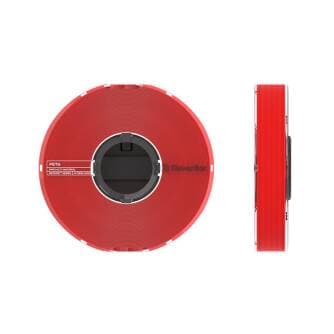
Prusament PETG Magnetite 40% Grey is a premium 3D printing filament from Prusa, featuring a dark, natural grey shade reminiscent of magnetite. PETG (Polyethylene Terephthalate Glycol) combines the ease of printing of PLA with the mechanical strength and thermal resistance of ABS. This material is known for its high toughness, impact resistance, and chemical resistance, making it ideal for functional parts and mechanical applications. It is less prone to warping than ABS and generally does not require an enclosed chamber. Prusament is characterized by tight diameter tolerances and excellent roundness, ensuring consistent print results. The recommended printing temperature ranges between 230 °C and 255 °C, while the heated bed should be set to 75 °C to 90 °C. A heated chamber can be beneficial for large prints but is not strictly necessary. PETG is resistant to many solvents and is excellent for use in humid environments as it absorbs very little moisture. Its strengths include good layer adhesion and translucency in thin walls, though it may exhibit stringing if retraction and temperature settings are not optimized.
 PETG
PETG