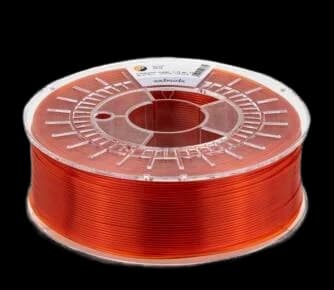
PETGExtrudr
Compare with other PETG filaments
Find the best filament for your project
* Affiliate link: We may earn a commission if you purchase through this link – at no extra cost to you. Learn more
* Prices include VAT, plus shipping. We may earn a commission if you purchase through these links – at no extra cost to you. Last updated recently.
Prices may change. Historical data is for reference only.
No reviews yet
Extrudr PETG Orange Transluzent is a high-quality 3D printing filament ideal for applications requiring both mechanical strength and optical effects. This PETG filament combines the benefits of polyester and glycol, resulting in a material that is more resistant to chemicals and UV radiation than PLA. The translucent orange color provides unique light play, especially noticeable in thin-walled or illuminated objects. PETG is also more heat-resistant than PLA and less prone to warping, making it an excellent choice for functional parts. Recommended print settings include a nozzle temperature between 220°C and 250°C and a heated bed temperature of 70°C to 80°C to ensure optimal adhesion. While an enclosed chamber is not strictly necessary, it can help minimize warping on larger models. The filament is well-suited for applications such as lamp housings, decorative elements, mechanical parts, and containers requiring some transparency. Key strengths include high toughness, chemical resistance, and ease of handling. Limitations include sensitivity to moisture, so the filament should be stored dry to avoid print defects.
Material TypeThe base polymer type determines printability, strength, flexibility, and heat resistance
PETG
Print TemperatureRecommended nozzle temperature range. Stay within range for best layer adhesion and surface quality
10°C - 10°C
Bed TemperatureHeated bed temperature to prevent warping. Some materials like PLA can print without a heated bed
70°C - 80°C
Diameter1.75mm is standard, 2.85mm for some printers
1.75 mm
Spool WeightNet weight of filament on the spool. Standard spools are 1kg (1000g)
10g
DensityMaterial density affects part weight. Higher density = heavier prints for the same volume
1.27 g/cm³