PLAKimya
Compare with other PLA filaments
Find the best filament for your project
* Affiliate link: We may earn a commission if you purchase through this link – at no extra cost to you. Learn more
* Prices include VAT, plus shipping. We may earn a commission if you purchase through these links – at no extra cost to you. Last updated recently.
No price data available
No reviews yet
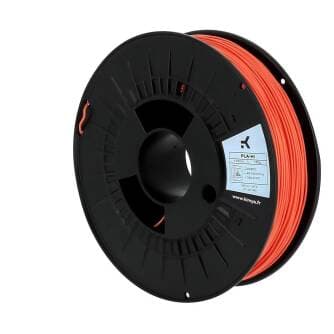
Kimya Tough PLA-HI Orange offers an innovative solution for users looking to combine the ease of use of PLA with the mechanical resilience of engineering materials. This high-quality 3D printing filament is distinguished by high impact resistance and stiffness, making it significantly more resistant to shocks and breakage than standard PLA. It is ideal for functional prototypes, mechanical parts, and robust enclosures, delivering reliable results even for demanding applications. Thanks to its excellent tensile strength, the material is particularly suitable for loads where standard PLA reaches its limits. For optimal print results, a nozzle temperature between 200 °C and 230 °C is recommended, while the heated bed should be set to 60 °C to ensure proper adhesion. As typical with PLA, this filament is easy to process and less prone to warping than ABS, though a closed chamber may be beneficial for maximum strength. Despite its superior mechanical properties, it is not heat-resistant and should not be used for applications above 55 °C. The vibrant orange also ensures visually appealing prints that stand out in any studio or workshop.
Material TypeThe base polymer type determines printability, strength, flexibility, and heat resistance
PLA
Print TemperatureRecommended nozzle temperature range. Stay within range for best layer adhesion and surface quality
200°C - 200°C
Bed TemperatureHeated bed temperature to prevent warping. Some materials like PLA can print without a heated bed
60°C - 60°C
Diameter1.75mm is standard, 2.85mm for some printers
1.75 mm
Spool WeightNet weight of filament on the spool. Standard spools are 1kg (1000g)
750g
DensityMaterial density affects part weight. Higher density = heavier prints for the same volume
1.24 g/cm³